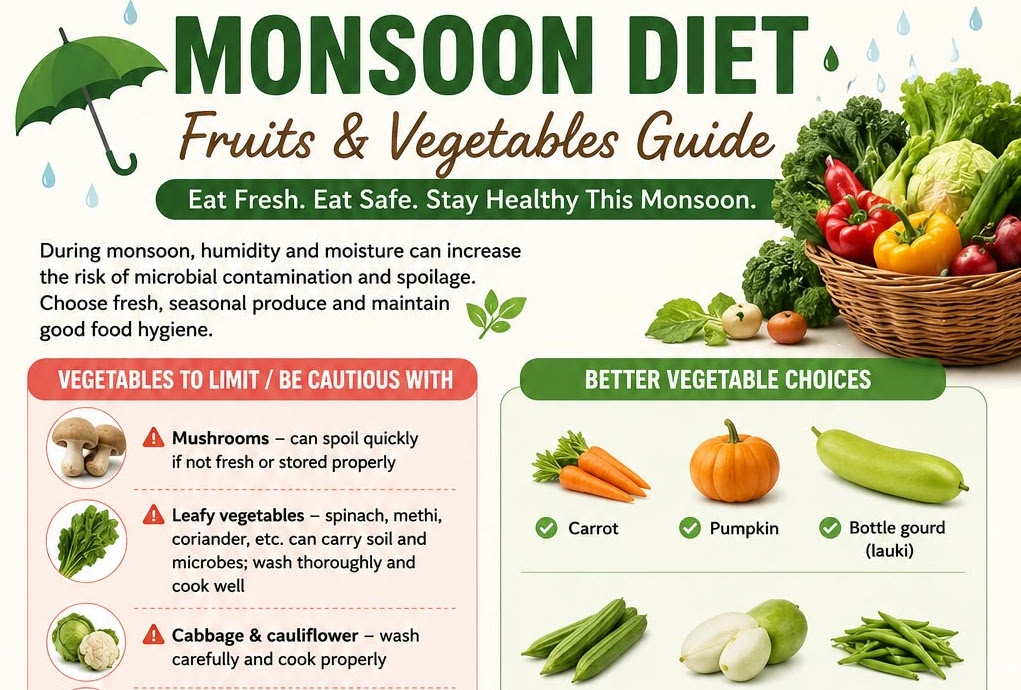
🌧️ MONSOON DIET: FRUITS & VEGETABLES GUIDE 🌿
During monsoon, humidity and moisture can increase the risk of microbial contamination and food spoilage. Choose fresh, seasonal produce and maintain good food hygiene.
🥦 VEGETABLES TO LIMIT / BE CAUTIOUS WITH
⚠️ Mushrooms – can spoil quickly if not fresh or stored properly
⚠️ Leafy vegetables – spinach, methi, coriander, etc. can carry soil and microbes; wash thoroughly and cook well
⚠️ Cabbage & cauliflower – wash carefully and cook properly
⚠️ Brinjal (eggplant) – check carefully for worms, spoilage and freshness
⚠️ Raw sprouts – higher risk of microbial contamination; prefer thoroughly cooked
⚠️ Raw salads – avoid when hygiene and washing are uncertain
🥕 BETTER VEGETABLE CHOICES
✅ Carrot
✅ Pumpkin
✅ Bottle gourd (lauki)
✅ Ridge gourd (tori)
✅ Ash gourd
✅ Beans
✅ Okra (bhindi)
✅ Capsicum
✅ Bitter gourd (karela)
🍎 FRUITS TO PREFER
✅ Apple
✅ Pomegranate
✅ Papaya
✅ Guava
✅ Pear
✅ Orange / Mosambi
✅ Chikoo
✅ Jamun (seasonal)
💡 DIETITIAN’S TIP
You don't need to completely eliminate mushrooms, cabbage, cauliflower or brinjal during monsoon. Freshness, proper washing, safe storage and thorough cooking are more important than avoiding these foods completely.
🌿 MONSOON RULE:
Fresh + Clean + Well-cooked + Hygienically stored = Safer food
No comments yet. Start the conversation!